Town Guide · Yunnan🟢 Field verified
Mile, Yunnan: A Slow Weekend in China's Grape Country
Slow travel and long stay in China's grape country: hot springs plumbed into the hotels, a French grape that died out in France, and a train ride from Kunming measured in minutes, not hours.
Slow travel and long stay in China's grape country: hot springs plumbed into the hotels, a French grape that died out in France, and a train ride from Kunming measured in minutes, not hours.
🟢 Field verified — I've been here: prices read off menus, trains actually taken Last updated: Aug 2026 · Next field check: Sep 2026
The train from Kunming South pulls into Mile in 35 minutes. Second class costs ¥34, about $5 at the August 2026 exchange rate. That's the whole commute between Yunnan's capital and a county-level city of roughly half a million that no Western itinerary mentions. Pronounce it MEE-luh, nothing like the English word for a distance.
Straight talk: I've spent slow weekends in Mile, and the numbers in this guide were checked in person during those visits — prices read off menus and tickets. The desk work went on top: three long-stay residents interviewed, every Chinese forum thread we could find, every figure cross-checked against at least two sources. Anything that still won't verify carries a [verify] tag. Mile is the town we keep recommending to anyone with one weekend — this is why.
Mile is not an ancient town. No old city. No famous old street. The heritage crowds go to Jianshui, an hour south. What Mile has, in absurd abundance, is two things: water that arrives already hot, and a grape variety that no longer exists in France. Soak first, sightsee later. That's the local logic.
Mile's real story is not a weekend. It's the possibility of staying.
Quick facts
| What | Figure |
|---|---|
| Where | County-level city in Honghe prefecture, south Yunnan |
| Population | roughly 500,000 |
| Elevation | about 1,430 m (4,690 ft) |
| Average year-round temperature | 18.8°C (66°F) |
| Train from Kunming | 35–60 mins (most 35 mins), ¥34 second class |
| Station to city center | taxi ¥15–20 [verify]; bus ¥2 (Chinese-only signage) |
| Visa | 30-day visa-free (50 countries, through Dec 2026) |
| Wine claim to fame | Rose Honey grape, gone from France, still grown here |
| Long-stay village room | from about ¥500 a month |
Prices in this guide were checked in person during my February 2026 visit and were accurate as of then — a reliable baseline, not a contract. [verify] = a number checked as of that visit, or still unconfirmed.
Why stay
Trains run all day: 38-plus D-trains, most taking 35 minutes from Kunming South (¥34 second class, ¥54.5 first), a few leaving from Kunming main station at over an hour (¥44.5). So the honest range is 35–60 minutes, most trips on the short end. Rail distance: 92 km (57 miles); driving, about two hours on the expressway, 130 km (81 miles). The station sits close to town: a taxi to the center runs about ¥15–20 [verify], or ¥2 on the bus (signs are Chinese-only).
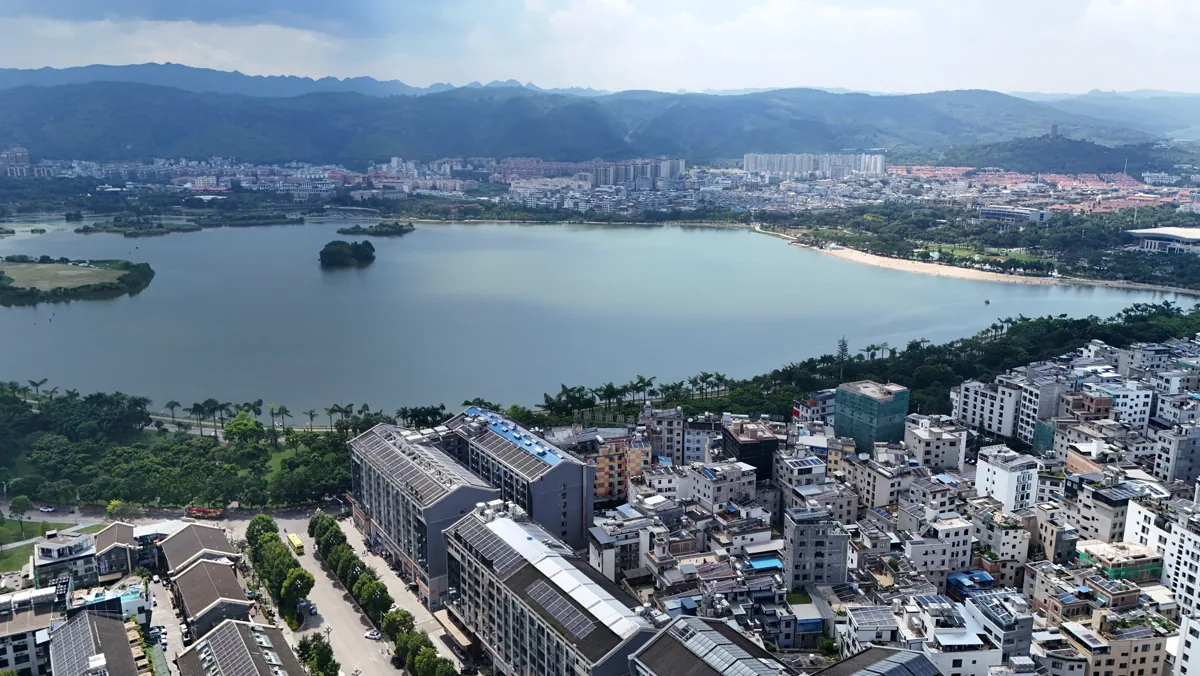
Hot spring water is plumbed into hotels across town and several apartment complexes. Soak culture as a utility, not a resort line item. The densest cluster is the Huquan ecological park area: a free lakefront park, 12 herbal soak pools, and villages renting rooms by the month.
June through August is the season: grapes ripen, wineries run picking days, evenings stay warm. Summer runs cooler than Kunming and most of the south; the city sells itself as a heat escape. The honest part of the calendar: winter is not warm. January nights drop to 2–5°C (36–41°F), and long-stay residents say it feels colder than Kunming because of the damp. Don't come in December expecting a tropical escape. Come for the empty hot springs. Or skip winter entirely. April to October is the sweet spot.
For us, the long-stay numbers are the real story, from Chinese long-stay forums and a three-month resident's diary. A simple room near Huquan park runs from about ¥500 a month: a village room, usually a single, shared bathroom, no kitchen. A two-bedroom in a managed complex runs ¥1,500–2,000 a month with hot spring water plumbed in; the newer buildings sell the soak like a utility, up there with water and power. "The villages around the park have cheap rooms, a few hundred to a thousand-plus," one resident wrote. One cost the listings don't show: heating. There's no central heating this far south. The damp cold gets into an unheated room, so budget for an electric heater or an AC heat pump from December through February. Apartments sell at roughly ¥6,000–7,000 per square meter (about $860–1,000 at 7 yuan to the dollar), well above Baoshan's ¥3,000–5,000, still far below Kunming. Foreign readers: non-citizens can't buy residential property in China, so treat those as cost context, not a buying guide.
Who fills those rooms? Wintering retirees from the northeast, remote workers, weekenders from Kunming. If you're in that second group, set up Alipay before you land. Rooms, meals and month bills all run on QR codes, and foreign Visa and Mastercard work once it's set: here's our Alipay guide. This year the city adopted the slogan "Arrive in Mile, unwind immediately" (yídào Mílè jiù kuàilè), printed on bus shelters and wine bottles. We're not sure it survives translation, but the intent does: stay a while.
A slow weekend: wine, red brick, lakes
The whole wine chain is at Yunnan Red Winery, 14 km (9 miles) from town. It bills itself as "South China's Number One Cellar", the largest wine cellar south of the Yangtze. Inside: 5,000 French oak barrels and a tasting room pouring Rose Honey reds and sweet whites from a local grape called Shuijing. Ten-plus varieties grow around it. The winery even runs its own hot spring, ¥88 a soak as of my last visit [verify]; on a budget, use the hotel pools instead. Around the first week of July, picking runs through the summer into September, and a winery near the Dongfeng vineyards runs picking days then. Our rule of thumb for one day here: one soak, one cellar tour, one art park. Skip the rest.
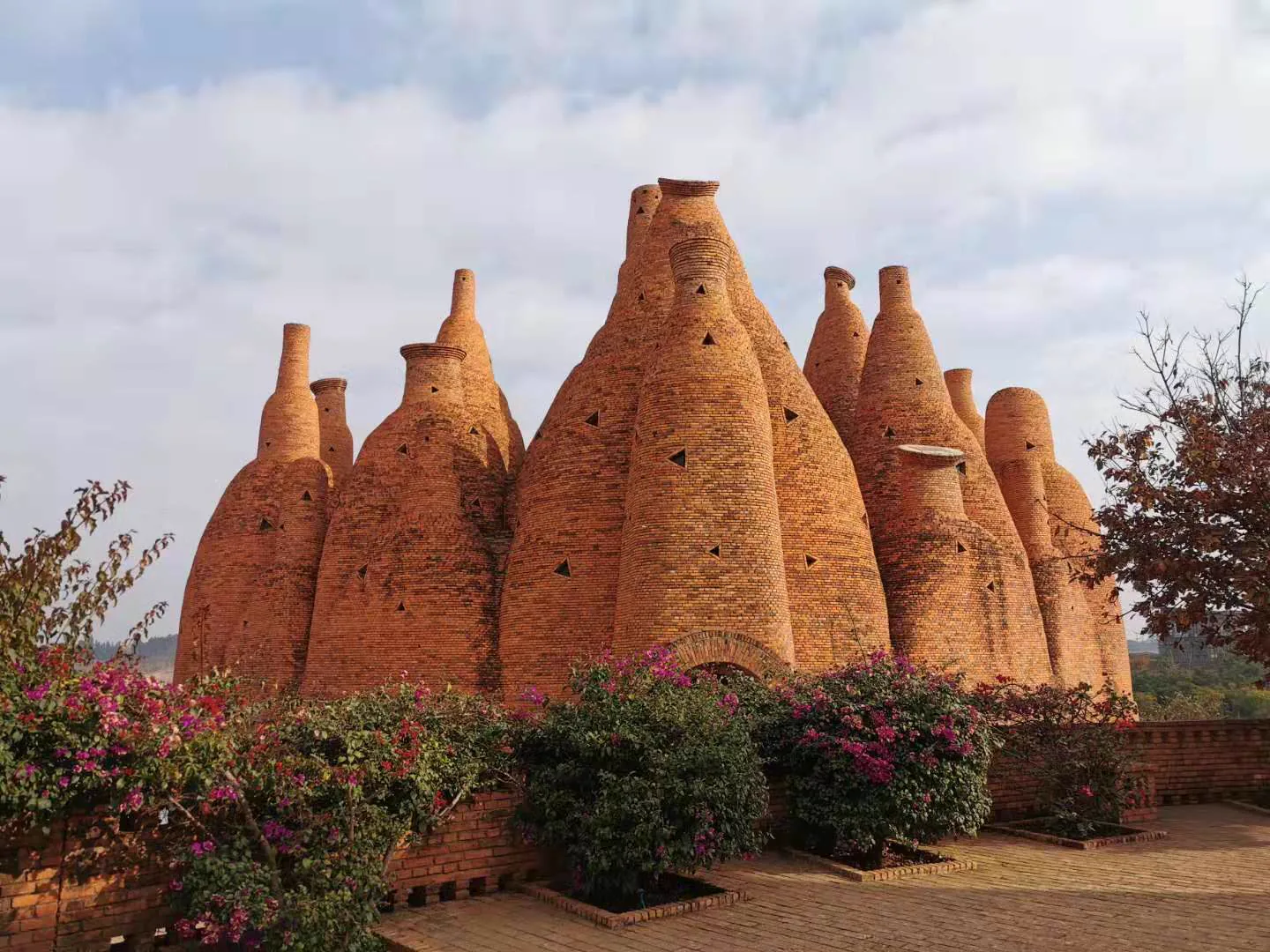
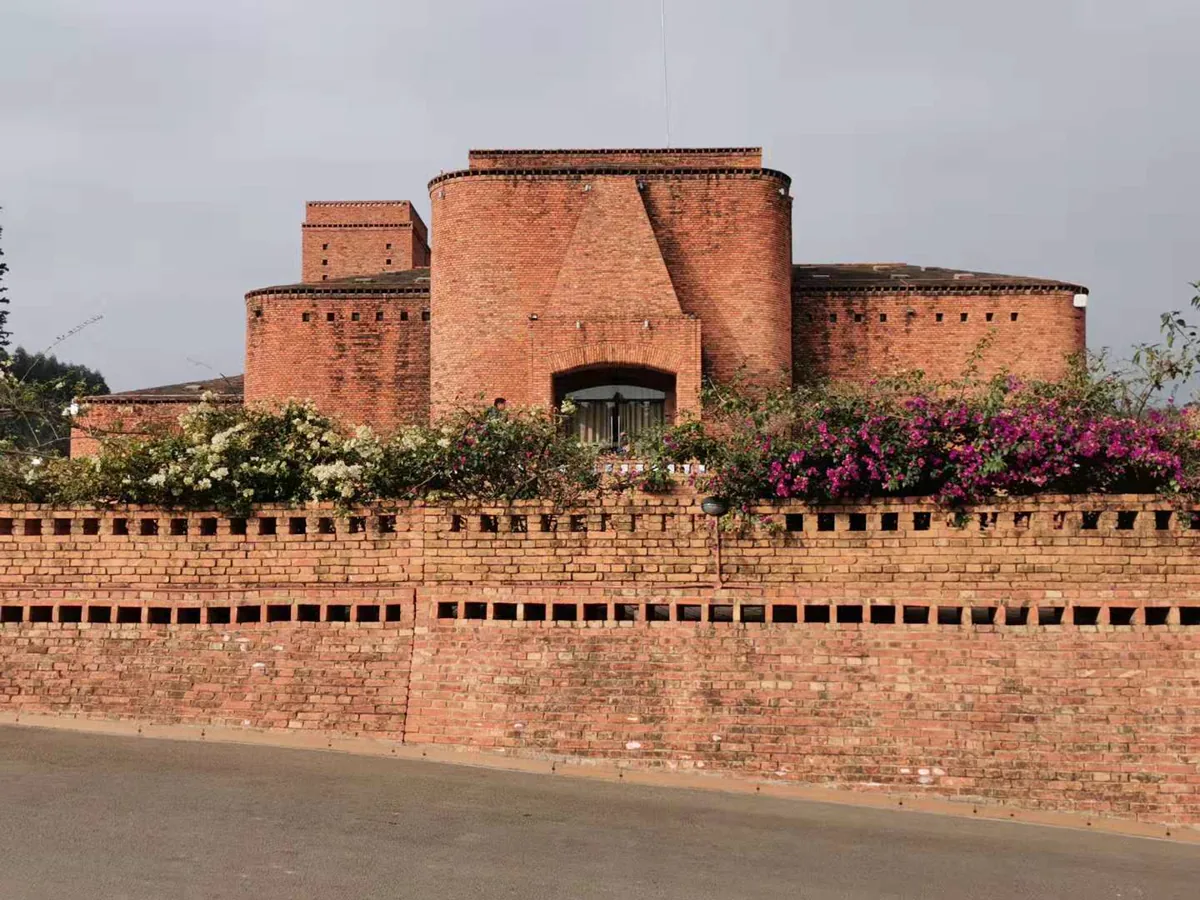
Up the road is why Mile went viral in China: Dongfengyun Art Town, red-brick buildings by the local artist Luo Xu. The Kaleidoscope hall looks like a megaphone on its wide end; the Half-a-Cloud cafe slumps like it's melting. Admission about ¥60. Go on a weekday morning. Weekends fill with tour buses from Kunming.
The rest of the menu, quickly: Taiping Lake Forest Park, 42 km² (16 square miles) of lake, forest, wooden cabins and large-scale land art, about ¥60–80, where locals take kids on weekends. Jinping Mountain: 1,999 steps up to a 19.99 m (65 ft) golden Maitreya, the laughing Buddha the city is named after. Keyi village, 20 km out, does the Yi Axi dance for visitors, about ¥60. Two or three slow days covers it.
Where the grape came from
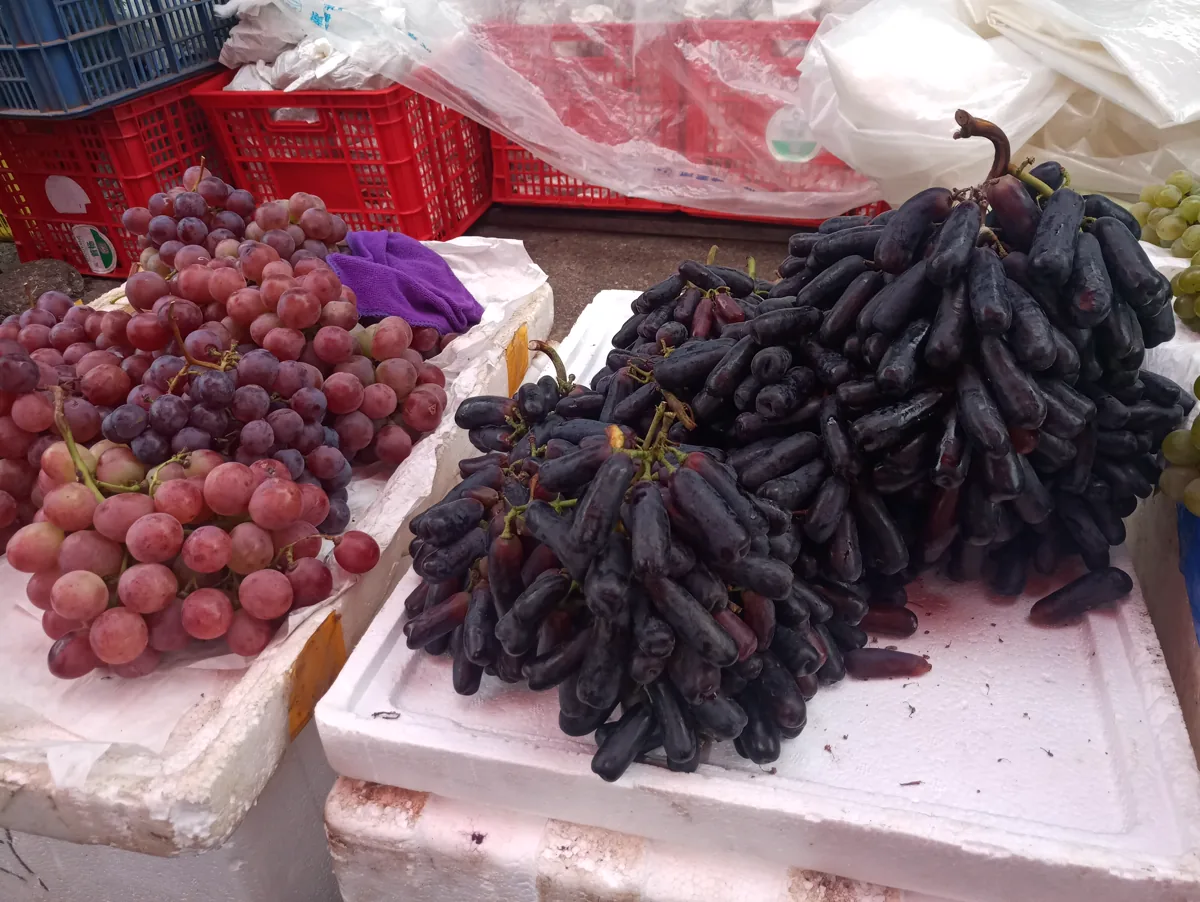
The wine story is why Mile calls itself China's grape country. Local accounts say French missionaries carried a variety called Rose Honey (méiguī mì) into Yunnan in the 1800s, along the tea-horse road, and taught villagers to make wine. The Yunnan–Vietnam railway, finished in 1910, spread the vines along its route; in the 1950s a state farm at Dongfeng planted them at real scale. That turned out to matter. The variety has since all but disappeared in France — the wine encyclopedias list it as French in origin, grown in Yunnan. Mile is where it survives.
The honest part
Mile was built for domestic visitors, and it shows. The friction, in list form:
- Language: English is thin. Menus, bus signs, shop fronts, all Chinese-first. Download an offline translation pack and set up Alipay before you arrive. You will likely be the only Westerner in most rooms. Some readers will find that delightful, others exhausting.
- Costs: the sights are spread out, and the tickets add up — roughly ¥210–230 (about $30–33) for the four main parks, plus taxis between them.
- Living costs: crept up as the "winter bird" crowd grew.
- Food: thinner than Jianshui's. One widely shared comparison calls Mile clean but a little sterile, lacking the street life of older towns.
- Water quality: draws the most complaints.
None of it stops us from recommending it, for what Mile is: not Jianshui, and not trying to be.
The bottom line
Go for a slow weekend if you want hot springs, wine and architecture without the Dali crowds. It's the easiest such weekend in Yunnan, 35 minutes from the capital's station. Stay a month if you want to test-drive small-city China at a few hundred yuan a week. And if the grape country hooks you, the next stop on the slow Yunnan line is Baoshan: 185 hot springs, a coffee valley, a January that reaches 26°C.
Thirty-five minutes from Kunming, a grape that vanished in France, hot water in the pipes. If that isn't the easiest slow weekend in Yunnan, I don't know what is.
Important note: prices in this guide were checked in person during my February 2026 visit and were accurate as of then. Small-town China moves fast — menus get reprinted, guesthouses change hands. Treat them as a reliable baseline, not a contract. The next field check is September 2026; every number gets re-read then.
Field Notes is our twice-a-month letter about slow travel in small Chinese cities: no fluff, no AI images, just numbers as they land. Mile's next field check is scheduled for September. Want it when it drops? Join the newsletter.
Sources
- Mile city government, tourism reply (January 2021): train time 34 minutes, average 18.8°C, elevation 1,432 m, AAAA sights list (Huquan, Keyi, Dongfengyun, Taiping Lake, Jinping Mountain): https://www.hhml.gov.cn/xjxq.jsp?leadermailid=6E6F015B3911AF64AAC6A644101C9550&urltype=leadermail.LeaderMailContentUrl&wbtreeid=5001
- Ctrip train schedule, Kunming–Mile (August 2026): 38 trains, 35 minutes from Kunming South, ¥34 second class / ¥54.5 first: https://trains.ctrip.com/trainbooking/kunming-mile/gaotie
- Culture & Tourism Headline, "Honghe Has Water (1): A Fine Vintage": Rose Honey history, 1910 railway, Dongfeng farm, "South China's Number One Cellar", 5,000 French oak barrels: http://m.wenlvnews.com/p/645640.html
- Culture & Tourism Headline (June 2026), "Follow the Must-Stay List into Mile, China's Wine Country": latitude 23.5°N, elevation 1,200–1,500 m, Rose Honey extinct in France, Shuijing grape, city slogan: http://m.wenlvnews.com/p/753122.html
- Wine-World grape encyclopedia, "Rose Honey": French origin, grown in Yunnan, ripens early July: https://m.wine-world.com/grape/rose-honey
- Tencent News (October 2025), "Mile vs Jianshui: Which Is Better for Retirement?": apartment prices ¥6,000–7,000/sqm, village rooms ¥500/month, two-bedroom ¥1,500–2,000/month, January lows 2–5°C, hot springs plumbed into housing: https://news.qq.com/rain/a/20251010A058US00
- Douban diary, "Three Months Living in Mile, Yunnan": village rents near Huquan park: https://m.douban.com/note/851511245/
- Kanghui Travel guide (July 2026), "Mile In-Depth: Dongfengyun, Wine Estates, Avoidance Tips": ticket prices, picking season, deep-travel routes: http://m.029558.com/content/detail/20161
- Trip.com (Hong Kong), Yunnan Red Winery hot spring: ¥88 admission: https://hk.trip.com/moments/theme/poi-yunnan-red-chateau-10548503-hot-springs-990161/
Image credits
- Cover — Dongfengyun Art Town — the red-brick Kaleidoscope hall that made Mile go viral. Ping an Chang · CC BY-SA 4.0 · https://commons.wikimedia.org/wiki/File:%E6%9D%B1%E6%96%B9%E9%9F%BB%E7%89%B9%E8%89%B2%E5%B0%8F%E9%8E%AE_20191224155438_01.jpg
- Photo — Huquan ecological park, Mile — lakefront and the hot spring district. CatOnMars · CC BY 4.0 · https://commons.wikimedia.org/wiki/File:DJI-Huquan_Water_Town,_Mile_City_2026.jpg
- Photo — Red-brick buildings at Dongfengyun Art Town, designed by local artist Luo Xu. Ping an Chang · CC BY-SA 4.0 · https://commons.wikimedia.org/wiki/File:%E6%9D%B1%E6%96%B9%E9%9F%BB%E7%89%B9%E8%89%B2%E5%B0%8F%E9%8E%AE20191224160419_03.jpg
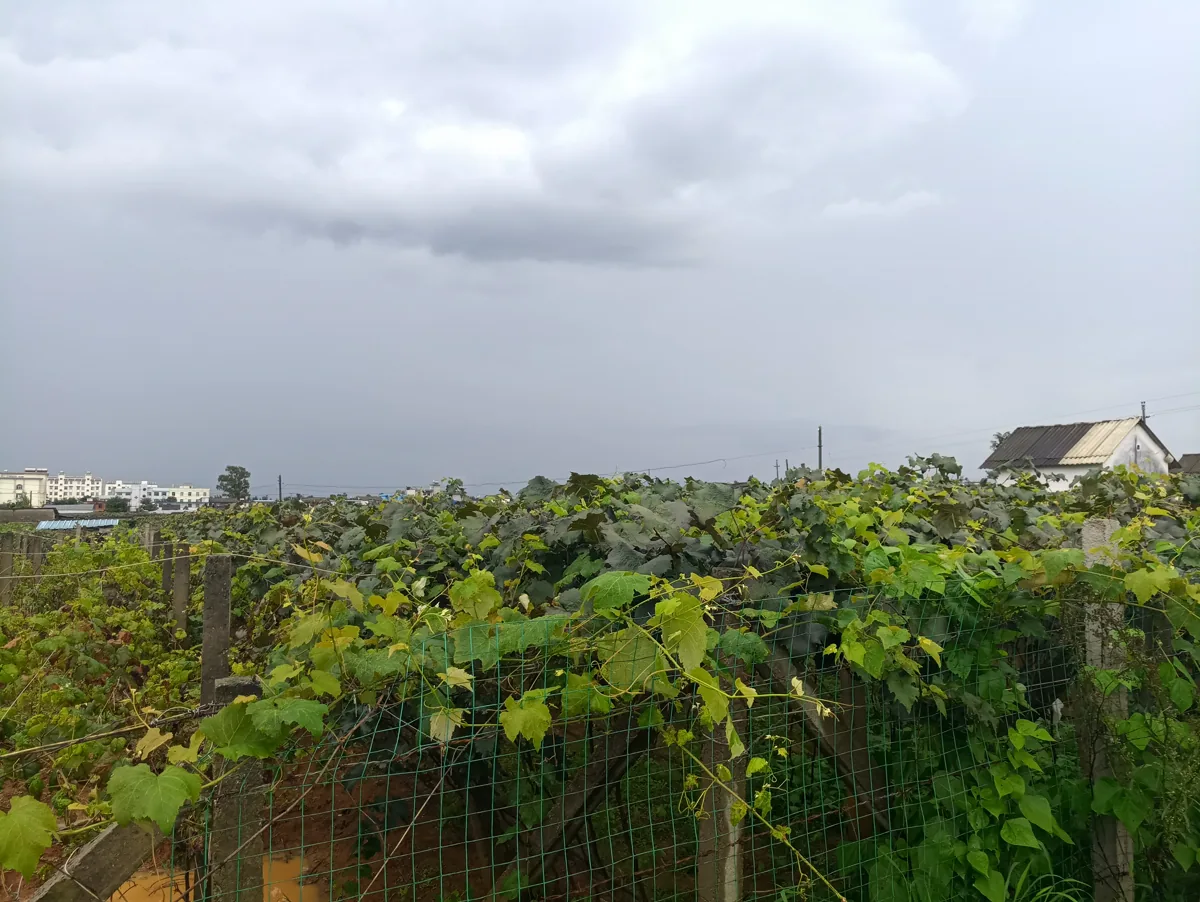
- Photo — Vineyards around Mile — Rose Honey grapes, gone from France, still grown here. 瑞丽江的河水 · CC BY-SA 4.0 · https://commons.wikimedia.org/wiki/File:%E5%BC%A5%E5%8B%92%E5%B8%82%E8%91%A1%E8%90%84%E5%9B%AD01.jpg
- Photo — Rose Honey grapes harvested near Mile. 瑞丽江的河水 · CC BY-SA 4.0 · https://commons.wikimedia.org/wiki/File:%E5%BC%A5%E5%8B%92%E5%B8%82%E5%87%BA%E4%BA%A7%E7%9A%84%E8%91%A1%E8%90%8401.jpg
All photographs are used under the Creative Commons licenses linked above, via Wikimedia Commons.